

“Trust but verify” comes not from Ronald Reagan but from Russia.
Reagan made the Russian proverb “doveryay, no proveryay” - trust but verify - famous during nuclear arms negotiations with the Soviet Union. Mikhail Gorbachev mentioned to Reagan how often he would say it.
“Trust, but verify” captures the Russian novelist Fyodor Dostoevsky’s core insight: trust is necessary for human and social order, but only trust that survives scrutiny becomes morally and institutionally durable.
For Dostoevsky, trust without verification is not virtue but self-deception, as his characters repeatedly discover when faith untested by evidence collapses into guilt, abuse, or chaos.
American Generosity
Any serious discussion of welfare and social insurance must begin with a simple truth: Americans are remarkably generous.
Year after year, we donate hundreds of billions of dollars to charitable causes—more than any other nation—and millions volunteer their time in faith-based groups, food banks, disaster relief efforts, and local civic organizations.
Time, talent, and treasure is what Father Abe taught us in the pews of St. Francis of Assisi in Staunton, but what the actual St. Francis famously taught the world was:
Preach the gospel always. When necessary use words.
Polling also shows broad public support for core safety-net programs like Medicaid and Paid Family Medical Leave, including among voters who describe themselves as fiscally conservative. (Yes, they still exist)
Fiscal conservatives don’t lack compassion, but they try to meet public expectation that assistance be fair, accountable, and reciprocal. They do lack a decent comms team, however…
Institutional Trust
Social trust that underpins successful welfare systems is under growing strain.
The 2026 Edelman Trust Barometer reports that roughly 70 percent of people globally are hesitant or unwilling to trust someone with different values, backgrounds, or approaches to solving problems, a shift the study describes as a slide from polarization into insularity.
In the United States, Pew Research Center data show that just 17 percent of Americans trust the federal government to do what is right most or all of the time—one of the lowest readings since the 1950's.
Additional Pew surveys find that only about 1 of 3 Americans believe that most people can be trusted, a sharp decline from prior decades.
These trust trends matter because welfare programs are fundamentally social compacts. They rely on contributors believing that others are paying in honestly, that benefits flow to people who qualify, and that rules are applied evenly.
When those beliefs weaken, programs become politically fragile and administratively costly, regardless of their stated intentions.
Program integrity data illustrate how easily confidence can erode. Federal oversight agencies estimate improper payment rates of roughly five percent in Medicaid and between five and eight percent across Medicare programs, driven primarily by documentation and eligibility errors rather than confirmed fraud.
While mainly unintentional, poorly administered programs erode trust and confidence nonetheless.
(Some private estimates of improper payments / fraud indicate could be up to 3 times higher than that.)
America’s fiscal reality magnifies
Our national debt is at historic highs.
Rising interest - not even principal - costs will simply crowd out other public investments.
As debt goes up, tolerance for waste, abuse, or perceived insider advantage goes…
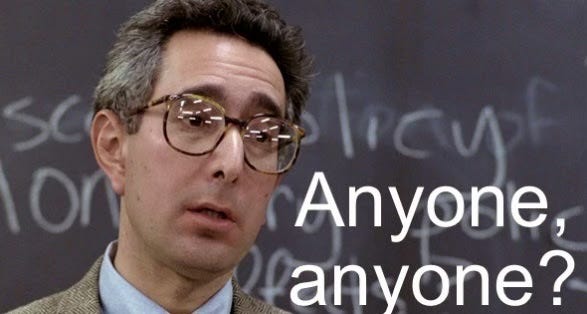
Down.
The answer is down.
Trust essential to the sustainability of welfare programs.
This dynamic is directly relevant to Virginia’s debate over Paid Family and Medical Leave under Senate Bill 2.
While the program aims to support workers and strengthen family stability, substitute language exempting Commonwealth employees from the program risks undermining trust.
Here’s the language via screen shot:

When government workers operate under different rules than the private-sector workforce financing the program, public buy-in will weaken.
And it’s political gold.

The negative campaign ads might write themselves, but they also harden the mistrust.
Remember all of those reforms were CENTRAL to passing the Medicaid Expansion compromise ?
In politics, 1+1 = Narrative.
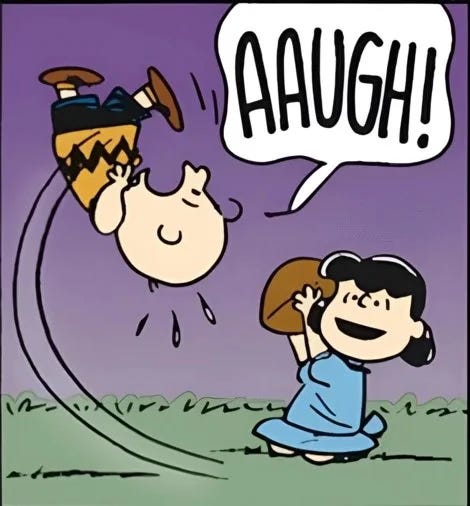
Trust but verify loses to Lucy and the football.
For welfare programs to endure—at the federal or state level—they must be designed as earned social insurance.
Uniform contribution requirements, transparent financing, and visible safeguards against abuse are not punitive measures.
They create trust. Verification creates success. Sustainable success.
In a society as generous as the United States, the binding constraint on welfare policy is not compassion, but confidence that the system is fair, reciprocal, and governed by the same rules for everyone.
Words matter. Policies matter. Trust matters.
Good intentions don’t necessarily create good social welfare programs.
Trust does. It’s essential.
Nordic countries have successful social welfare programs because they have MUCH higher levels of social trust.
Almost TWICE as much as the U.S.
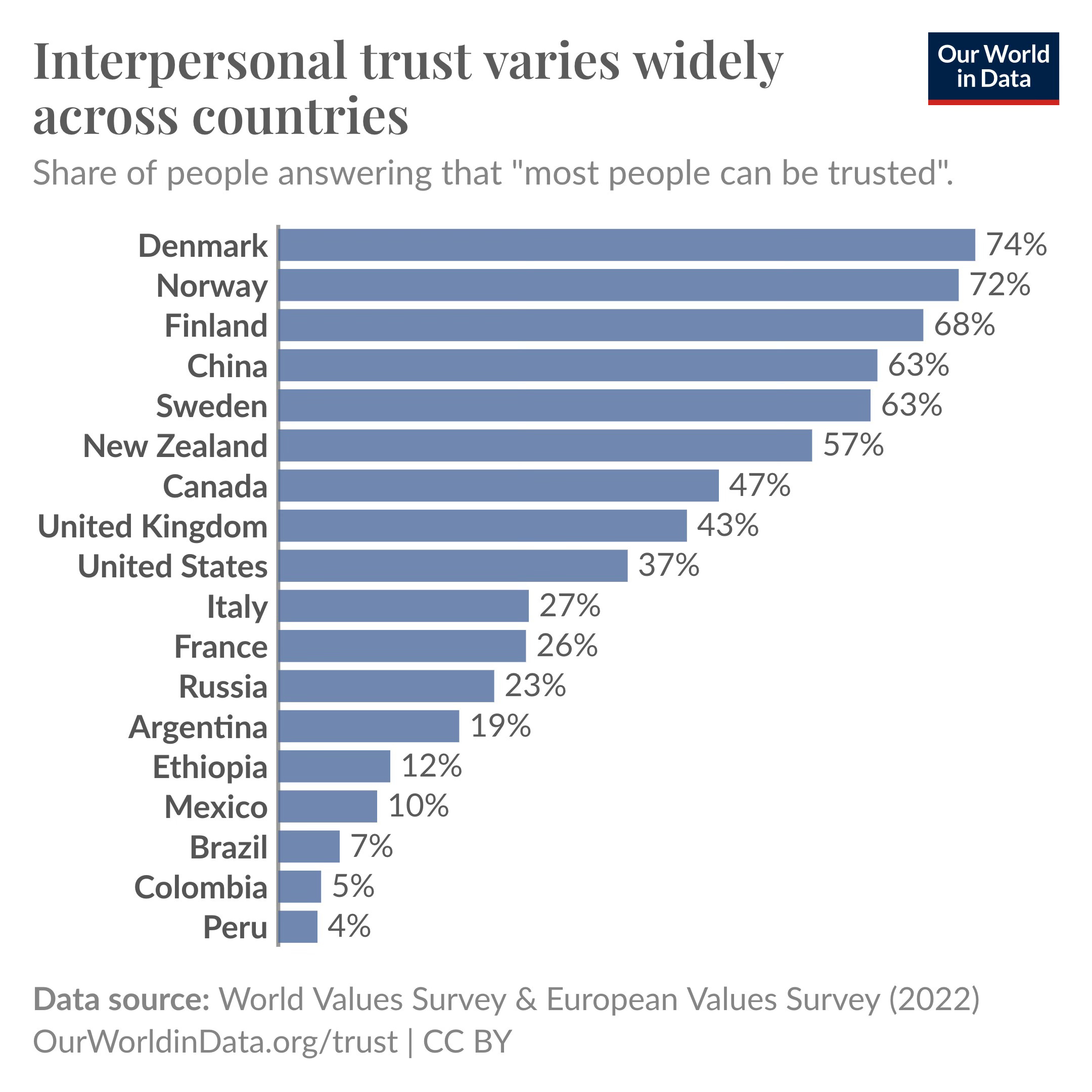
Those countries are now experiencing political instability due to trust issues as newcomers are being seen as taking advantage of generosity.
Building verification systems into social welfare programs should not be about catching people gaming the system and our generosity, but rather stopping dangerous self-deception from the outset.
Next we’ll discuss how higher levels of regulation and taxation harm smaller and mid sized companies competing against larger ones.

or some such…
Until then please subscribe, like, and share!
Listen to what the door mouse said
Feed your head…
Feed your head
One pill makes you larger
And one pill makes you small
And the ones that mother gives you
Don’t do anything at all
Go ask Alice
When she’s ten feet tall
And if you go chasing rabbits
And you know you’re going to fall
Tell ‘em a hookah-smoking caterpillar
Has given you the call
He called Alice
When she was just small
When the men on the chessboard
Get up and tell you where to go
And you’ve just had some kind of mushroom
And your mind is moving low
Go ask Alice
I think she’ll know
When logic and proportion
Have fallen sloppy dead
And the White Knight is talking backwards
And the Red Queen’s off with her head
Remember what the dormouse said
Feed your head
Feed your head