The Big Q
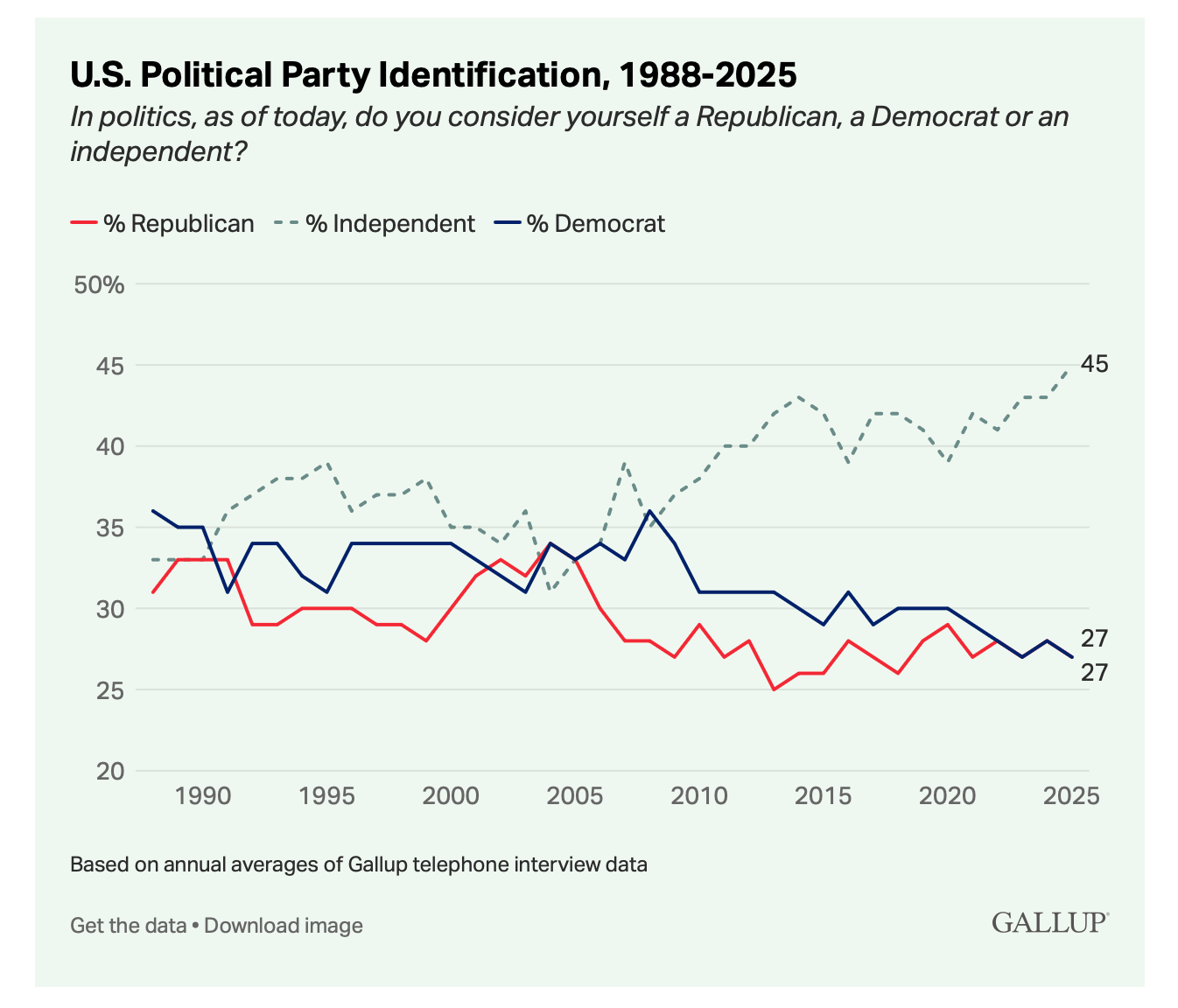
Are Americans simply voting against the party in power, or is the country beginning a more fundamental political realignment?
2028 is going to YUGE!
Voters are unhappy with both parties.
Ten Trends
1. Trump’s endorsement power
Trump’s ability to transfer his support to endorsed candidates is the critical test of his continued influence. Weaker endorsement power could signal the start of a post-Trump Republican Party before his presidency ends. Does a civil war in the GOP break out and possibly break up the party?
Watch: Trump-endorsed candidates run in competitive House and Senate races compared with other Republicans on the same ballot.
Best Guess: Trump’s hold on the GOP will continue to wane. His endorsements were not a sure thing for nominations earlier this year.
2. The Democrats’ direction: the DSA challenge
The growing influence of Democratic Socialists gives Democrats a strategic dilemma: energize the progressive base, win competitive elections, or have an open civil war.
Tonight helps show whether the party moves further left or toward a more pragmatic message.
Watch: LA’s mayor’s race, where DSA city councilmember Nithya Raman faces incumbent Democrat Karen Bass. DSA-endorsed Janeese Lewis George is favored for D.C. mayor.
Best Guess: DSA will win seats, will be a messaging & governing problem for Democrats, and the GOP will begin comeback with anti-DSA messaging.
3. Independents, third parties, and the Spoiler Effect
Dissatisfaction with the two-party system opens room for independents and new movements. The question is whether they become real alternatives or stay protest votes, and in close races, whether minor-party candidates draw more votes than the winning margin. That raises questions about campaign financing, ballot access, and electoral reforms.
Watch: Indiana’s Secretary of State race, where Greg Ballard’s new Lincoln Party needs 2% to win a permanent ballot line (10% earns state-run primaries). Then compare third-party totals with the margin in every close race. Virginia has 14 independents on the congressional ballot this year. 2022 there were 2 and in 2024 there were 4. #Trend
Best Guess: There will be spoilers tonight and it will make a difference going forward. Both parties will quietly dismiss but strategically adjust.
4. Democrats’ red-state strategy
Democrats may be finding that populist, culturally moderate candidates who connect with working-class and independent voters can win where national party messaging struggles. Their results could offer a model for rebuilding Democratic competitiveness in red and purple states.
Watch: Kansas, North Carolina, Texas and Georgia U.S. Senate races.
Best Guess: Winner, winner chicken dinner. This will pay off for Democrats but DSA battles lie ahead for control of the party.
5. House control may run through Virginia
Watch: Virginia early tonight and in this order: VA 2 (Kiggans/Luria), VA 1 (Wittman/Taylor), and VA 5 (McGuire/Perriello).
That’s 2-1-5. Not just who wins, but watch the margins. That will be a good lens into the rest of the evening.
Best Guess: Luria, Taylor, and Perriello all over perform. Virginia Democrats have covered the spread every election with Trump in the White House.
GOP’s best bet is McGuire but that portends a new Speaker of the House in Hakeem Jeffries as Luria and Taylor are poised to win.
6. Virginia’s statewide ballot: Warner and three amendments
Sen. Mark Warner seeks a fourth term against retired Army Maj. Gen. Bert Mizusawa. Voters also decide three proposed constitutional amendments: reproductive freedom, restoring voting rights after incarceration, and marriage.
Watch: Warner’s share against the 56% he won last time, a read on the national environment, and the margins on each amendment.
Best Guess: All four cover the spread. The GOP just has had nothing on the ground this year. Zero message. #RenameTheAdvance #FullScaleRetreat
7. First poll closings as bellwethers
The earliest states offer a first look at turnout and shifts in the political landscape. Early returns can show mobilization trends but cannot by themselves establish which party is winning.
Watch: Indiana and eastern Kentucky at 6 p.m. ET; Virginia, Georgia, South Carolina and most of Florida at 7 p.m.
Best Guess: It’s going to be an early night for the House, but the Senate could go well into the night with Alaska TBD.
8. Data centers become a political flashpoint in Virginia
Fights over electricity rates, water, land use and local tax breaks are turning data center growth into a consequential political issue. The effects reach beyond Northern Virginia into rural counties where large tech investments could transform local economies.
Watch: congressional and local races where data centers were a central campaign issue.
Best Guess: GOP suffers some but not great loses of margins in Botetourt, Goochland, Carroll, Roanoke, Chesterfield, and Henrico.
9. The 2028 Republican succession: Vance vs. Rubio
The competition between JD Vance and Marco Rubio will help define the party after Trump. Their standing depends heavily on trend 1: whether tonight strengthens or weakens Trump’s influence.
Watch: who claims credit, and who keeps distance, after the results.
Best Guess: Rubio comes out unscathed. Vance not so much. Q - seen Marco lately?
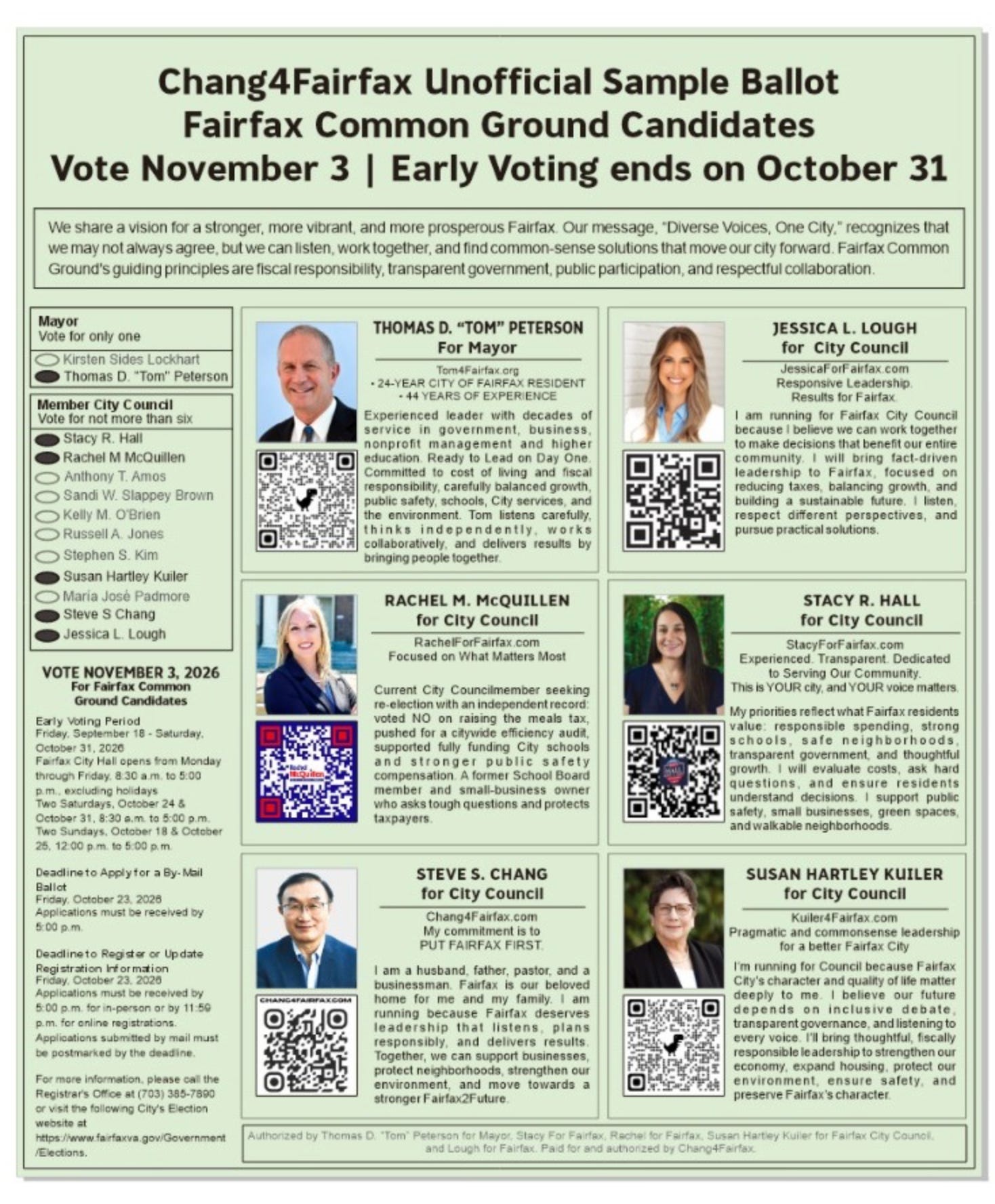
10. The Common Ground experiment in Fairfax City
The independent-minded Common Ground slate is a small but revealing test of whether candidates can organize outside party endorsement structures. Fairfax City elections are nonpartisan by law and tradition. A strong showing could offer a model for a less partisan approach to local government.
Watch: the open mayor’s seat and the 11 candidates for city council.
Best Guess: Momentum for more moderates in Democratic Party creates waves heading into 2027 primaries. #GrabPopcorn